

Organ Science
Key takeaways
- On 18 August 2026, Vero announced an exclusive consumer license to Stanford's proteomic Cell Clock technology, developed in the laboratory of Vero co-founder Dr. Tony Wyss-Coray.
- The Ding et al. Nature Medicine 2026 study (n=60,542) modeled biological aging across 40+ cell types using plasma proteomics, finding that 20–25% of individuals show accelerated aging in a single cell type and 1–3% in ten or more.
- Cell-type resolution captures signals that organ-level measurement cannot: in the Ding et al. study, individuals with two APOE4 alleles showed divergent astrocyte and macrophage aging trajectories that a single brain-age score would average away.
- No published intervention study has demonstrated that proteomic cell-type age can be lowered; Vero's Cell Clock integration measures aging at cell-type resolution and does not imply a treatment pathway.
- OrganAge™ remains Research Use Only; general availability is 2027.
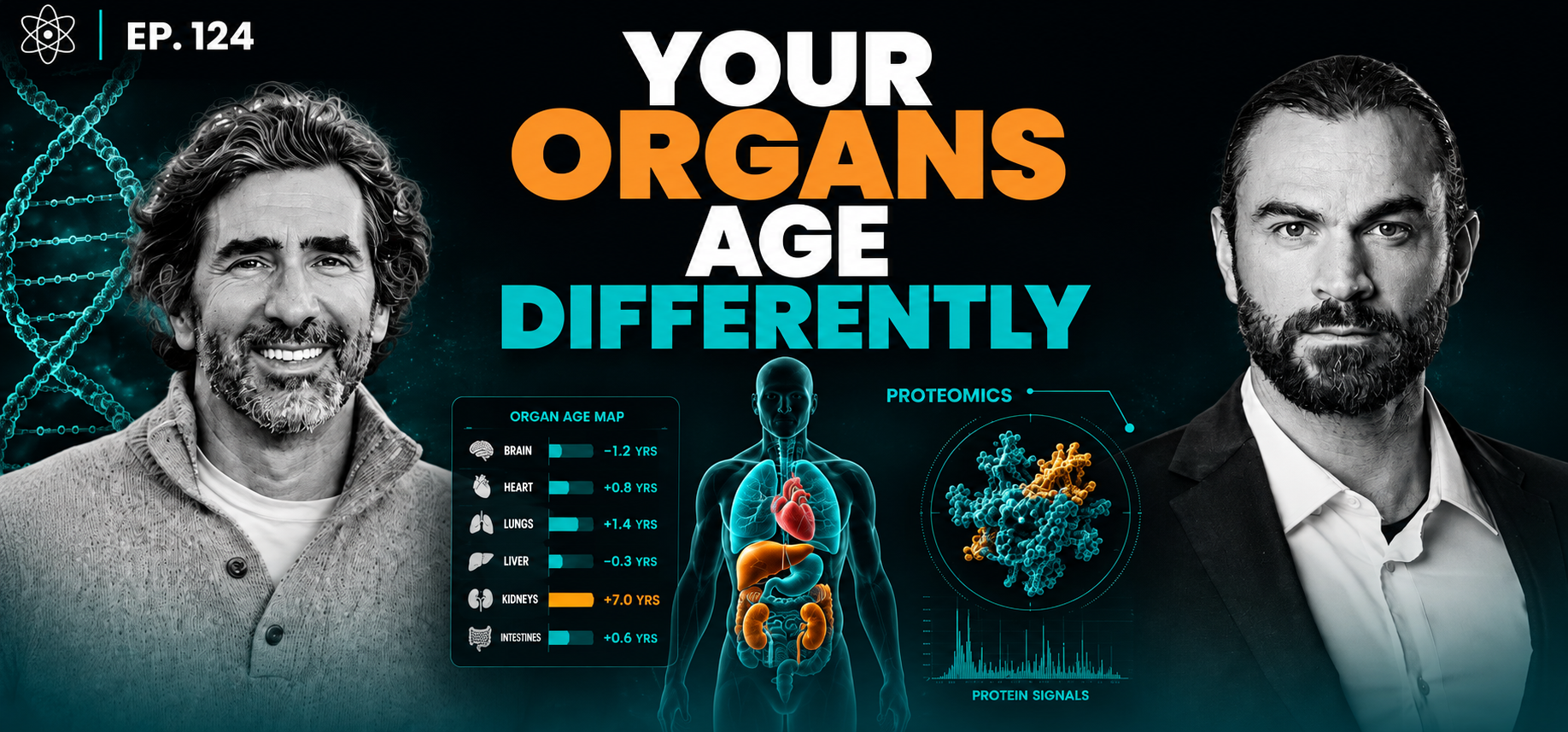
Biological age doesn't move in step across your body. Different organs age at different rates. The same is true one level deeper: within a single organ, different cell types can be aging at entirely different speeds.
On 18 August 2026, Vero announced an exclusive consumer license to Stanford's proteomic Cell Clock technology, developed in the lab of Vero co-founder Dr. Tony Wyss-Coray, and confirmed it is integrating Cell Clocks into the OrganAge™ platform. The underlying science, published in Nature Medicine in June 2026, modeled biological aging across 40+ cell types in 60,542 people.
The Announcement
Vero has secured an exclusive consumer license to Stanford's Cell Clock technology, originating from the Wyss-Coray laboratory. Cell Clocks extend the OrganAge™ platform from organ-level to cell-type-level biological age measurement, yielding a higher-resolution view into biological aging.
The innovation arc is clear. Oh et al.'s 2023 Nature paper established that individual organs age at different rates and that those differences predict disease risk and mortality across large populations. (Oh et al., Nature 2023;624:164–172.) Cell Clocks go one step further, asking not just how old the heart looks, but which cells inside it are driving that aging signal. The integration of both technologies into OrganAge™ means a single blood draw carries information at two levels of biological resolution.
The Science Behind the License: What Cell Clocks Actually Measure
The Ding et al. Nature Medicine 2026 paper (2026;32(6):2060–2072) is the scientific foundation for this announcement. Across 60,542 individuals, researchers measured more than 7,000 plasma proteins using both SomaScan and Olink platforms, then used those measurements to model the biological age of 40+ individual cell types, spanning neuronal, immune, glial, endocrine, epithelial, and musculoskeletal origins.
The method rests on a straightforward principle: proteins in blood plasma carry signatures of the cells that produced them. Measure enough of those proteins at sufficient resolution and patterns emerge that reflect the biological age of specific cell populations, not just the organ they inhabit. Machine learning models trained on those patterns can then estimate, from a standard blood draw, how old a given cell type appears relative to chronological age.
The prevalence findings are concrete: 20–25% of individuals showed accelerated aging in a single cell type; 1–3% showed it in ten or more. Cellular aging signatures were associated with disease status and predicted incident disease and mortality over 15 years of follow-up. (Ding et al., Nature Medicine 2026;32(6):2060–2072.)
Stage: peer-reviewed, published, not yet a cleared clinical tool. Research Use Only.
What Cell-Type Resolution Reveals
The clearest illustration comes from the APOE4 findings in the Ding et al. paper. Individuals carrying two copies of the APOE4 allele showed markedly older astrocytes compared to APOE3 carriers, and extreme astrocyte aging tripled the risk of incident Alzheimer's disease in that group. Macrophage age moved in the opposite direction: younger, not older, in the same individuals. (Ding et al., Nature Medicine 2026;32(6):2060–2072.)
Organ-level brain age, measured as a single number, would average across both signals and return something in the middle. The astrocyte finding and the macrophage finding point in different directions and carry different implications, so they'd disappear into the aggregate. Cell-type resolution keeps them separate.
This is the argument for why resolution matters: not that more granular is inherently better, but that some of the most clinically meaningful signals live at the cell-type level and cannot be recovered from organ-level data alone.
Whether organ age responds to intervention is one of the most important open questions in the field, and it's exactly what Vero's clinical work with Biograph is designed to answer. (Biograph study: in progress, not concluded.)
Measuring a cell-type age gap is not a prescription. Vero is directive, not diagnostic™.
What Vero Is Building Toward
The Cell Clock integration adds a layer of resolution to the platform without changing its regulatory status: no biological age test is FDA-cleared, and this is not one. What it changes is the depth of the picture a single blood draw can return.
The logic behind the move is the same logic that underlies the whole platform: measurement has to precede targeting. You cannot intervene on a cell-type aging signal you cannot see. Whether that signal is modifiable, and in whom, and through what, is the work the science is now positioned to pursue.
Vero's mission is to end age-related chronic disease. That mission doesn't start with a treatment. It starts with knowing which part of you is aging fastest, at which level of resolution, and what the evidence says that means for long-term health. The Cell Clock license is the next step in building that picture.
Early access
Discover your OrganAge™
Join our waitlist to get priority access to OrganAge™ and Vero Compass™ as they become more widely available.
Get early accessEarly access
Discover your OrganAge™
Join our waitlist to get priority access to OrganAge™ and Vero Compass™ as they become more widely available.
Get early access