


Podcasts
Key takeaways
- Coletta's central claim: chronological age outweighs poor diet, smoking, and physical inactivity combined as a risk factor for chronic disease.
- A 2019 Nature study shows biological aging happens in waves — spikes in the late 30s, around 60, and a sharp rise around 80 — not a steady linear decline.
- Vero's thesis: organs age at different rates, and an accelerated organ can send inflammatory signals that affect the rest of the body.
- Coletta's own test flagged his kidney as biologically 8 years older than his chronological age; a follow-up ultrasound found a benign cyst his standard labs missed.
- A second study validating Vero's models across 45,000 people is set to publish in Nature Medicine; Vero is recruiting its first 100 beta testers later this year.
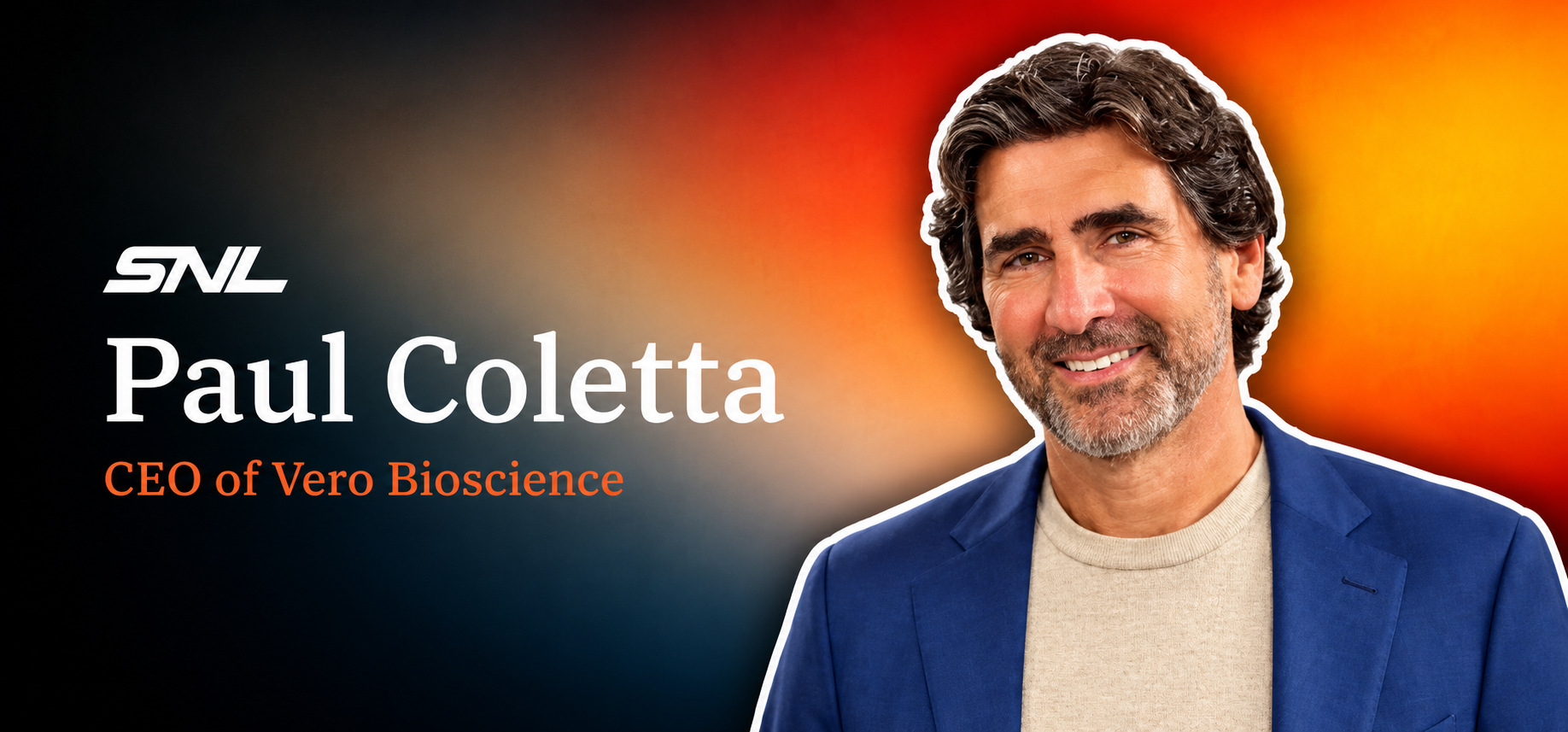
Vero co-founder and CEO Paul Coletta took the stage at Near Future to share Vero publicly for the first time.
Age is the risk factor that outweighs everything else
Coletta opened with a direct claim: chronological age outweighs poor diet, smoking, and physical inactivity combined as a risk factor for chronic disease. The reason is that aging isn't just time passing, it's the accumulation of damage outpacing the body's ability to repair it. He pointed to a CDC statistic that 60% of Americans over 65 live with two or more chronic diseases, framing it as biological wear and tear rather than randomness.
Aging happens in waves, not a straight line
Citing a 2019 Nature study, Coletta described biological aging as non-linear, showing distinct spikes in aging-related proteins in the late 30s, around age 60, and a sharp rise around 80, rather than a steady, gradual climb.
You're only as healthy as your oldest organ
The core of Vero's thesis: biological aging isn't uniform across organs, and an accelerated organ doesn't age in isolation. Coletta described it as effectively "contagious" — an aging organ giving off inflammatory signals that can affect the rest of the body.
"You're only as healthy as your oldest organ." — Paul Coletta
A three-step process, and a personal result
Coletta outlined Vero's process: a single blood draw analyzes thousands of the body's proteins, proprietary AI maps a biological age across more than 11 organs, and the resulting "age gaps" point toward targeted interventions, followed by retesting to confirm what actually worked.
He shared his own results as an early tester of the underlying Stanford-developed technology: at 60, his kidney came back biologically aged 68, despite normal traditional bloodwork. A follow-up ultrasound found a benign renal cyst. A real finding his standard labs had missed entirely.
What's next
Coletta announced that a second, previously unpublished study validating Vero's models across 45,000 people is set to publish in Nature Medicine. He also confirmed Vero is recruiting its first 100 beta testers later this year.
Early access
Discover your OrganAge™
Join our waitlist to get priority access to OrganAge™ and Vero Compass™ as they become more widely available.
Get early accessEarly access
Discover your OrganAge™
Join our waitlist to get priority access to OrganAge™ and Vero Compass™ as they become more widely available.
Get early access