


Podcasts
Key takeaways
- Most biological age tests give a whole-body score that’s hard to act on. Vero measures about 11,000 blood proteins to estimate an age gap for each of 11 organs.
- Paul Coletta’s own test flagged his kidney as seven years older than he was, despite normal standard labs. Imaging found a large renal cyst.
- Vero’s models were trained on 45,000 people from the UK Biobank followed for 17 years, so results estimate relative risk rather than diagnose disease.
- Coletta calls the brain the gateway organ and names deep sleep as the intervention he’d prioritize.
- Vero Compass™, currently under development, is designed to pair findings with interventions and retesting in one to three months, with a clinician in the loop.
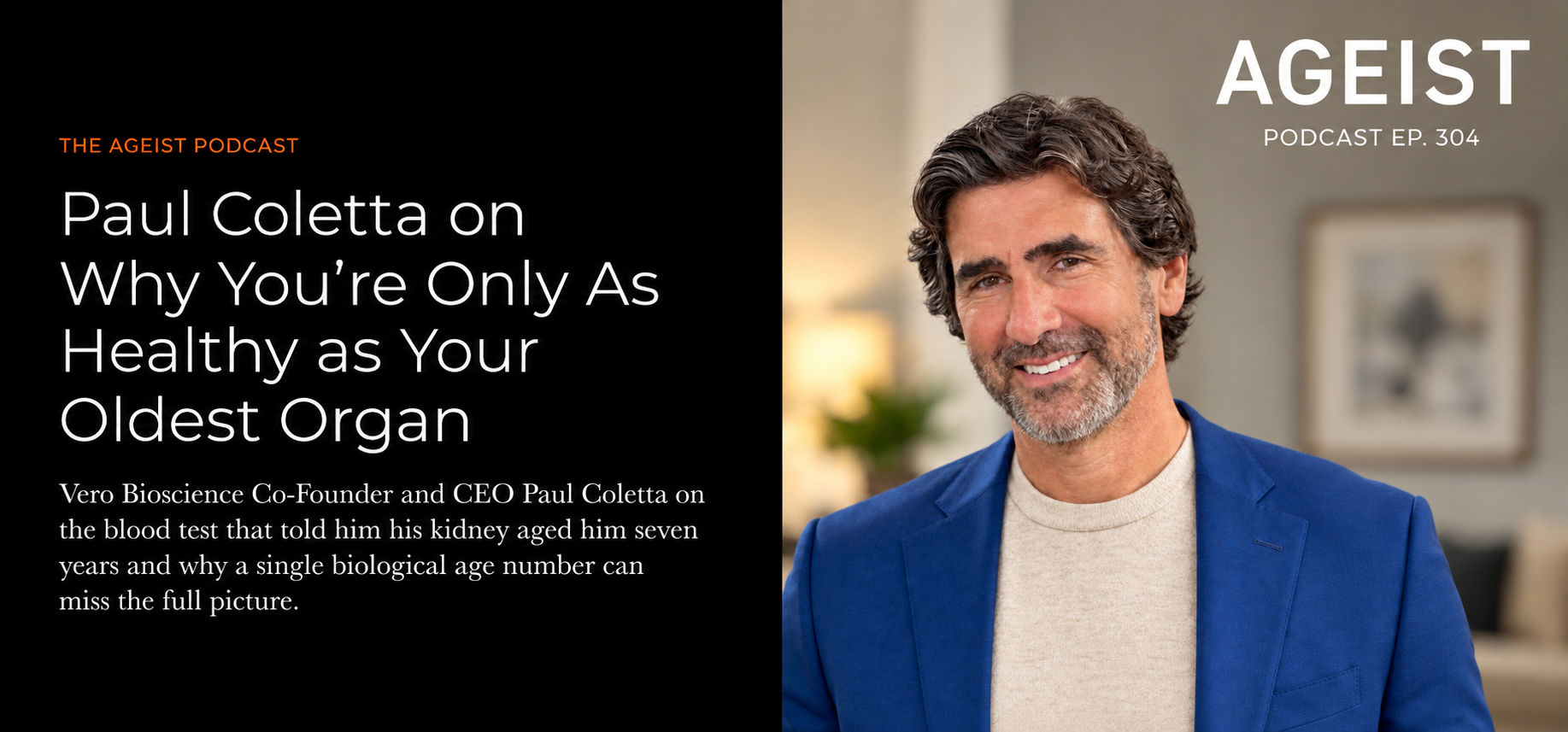
Vero co-founder and CEO Paul Coletta joined host Drew Griesel on the Superhuman Blueprint podcast to talk about a gap many people never see: blood work that looks normal while one organ is quietly aging faster than the rest.
The “what next” problem with biological age
Griesel opens with his own experience: a lab test told him his biological age was about nine years younger than his chronological age, but he didn't know what to do with that. Coletta calls this the “what next” problem. Most biological age clocks use DNA methylation to produce a vague whole-body estimate. Vero uses proteomics instead. DNA is a blueprint, he explains, but a blueprint can't tell you whether the house has a burst pipe. Proteins can, because they're the molecules doing the work, and they change as your health changes.
A kidney that normal labs missed
Coletta's path to Vero started when co-founder Markus Okumus introduced him to the Stanford research of Tony Wyss-Coray, PhD. An early version of the test flagged his kidney as seven years older than he was, even though his standard blood work looked fine. Imaging then found a large renal cyst, a sign of aging. The change that seemed to help most, he says, wasn't exciting: drinking a lot more water. On later tests, the gap for his kidney narrowed.
“Cars don't fail at the odometer, and neither does the human body.” — Paul Coletta
How organ age is estimated
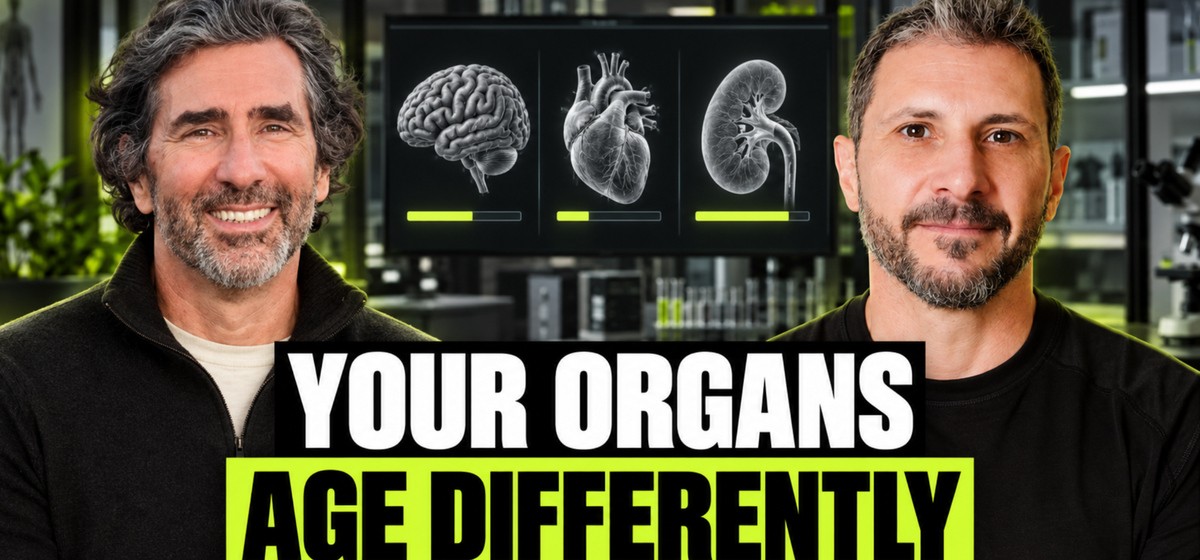
From a single blood draw, Vero measures about 11,000 proteins and matches their signatures to people of the same age in a 45,000-person subset of the UK Biobank, followed for 17 years. That makes the result predictive, not diagnostic: it estimates relative risk for each of 11 organs, including the brain, heart, immune system, kidney, liver and pancreas. Coletta also previews Vero's cell clock technology, which aims to show not just which organ is aging faster but which cells are driving it.
The brain as the gateway organ
Coletta describes the brain as the gateway organ, because it influences every other organ. If he had to pick one intervention, it would be sleep quality, especially deep sleep. He also shared parts of his own routine, including creatine, morning sunlight and one pharmaceutical intervention, framed clearly as what has seemed to work for his own biology and not as a recommendation for anyone else.
Data rich, insight poor
“We are drowning in data,” Coletta says. Many longevity companies sell more data, when what people need is insight and guidance. Vero Compass™, currently under development, is designed to close that loop: test, try an intervention, then retest in one to three months to see whether it moved the needle, with a clinician in the loop. He frames it as a message of empowerment, not fear.
Where Vero is today
OrganAge™ is currently available through clinical research partnerships, starting with Biograph, under IRB oversight. Coletta expects direct-to-consumer access to be about a year away, and says the long-term goal is a price point that makes the test accessible to everyone.
Watch the full conversation above, including Coletta's honeybee analogy for how much our biology can change and his take on living longer versus living well.
Early access
Discover your OrganAge™
Join our early access list for updates on OrganAge™ and Vero Compass™ as they become more widely available.
Get early accessEarly access
Discover your OrganAge™
Join our early access list for updates on OrganAge™ and Vero Compass™ as they become more widely available.
Get early access