
Podcasts
Key takeaways
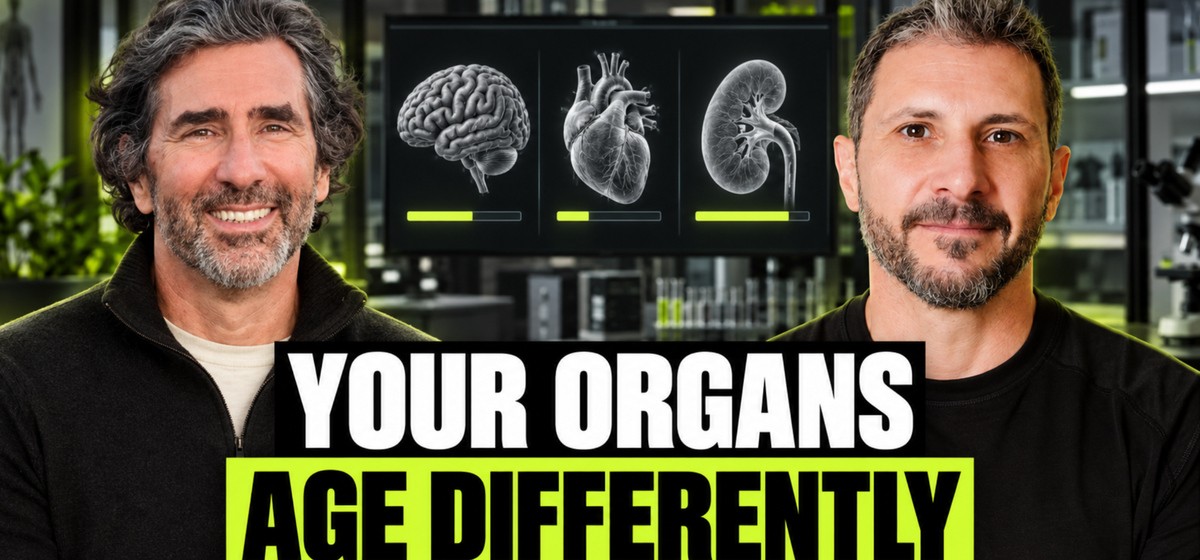
- Most biological age clocks measure DNA methylation and produce a single whole-body score. Vero measures about 11,000 blood proteins, which Coletta calls real-time reporters, to estimate an age gap for each of 11 organs.
- Knowing your most accelerated organ points to the weak link: you’re only as healthy as your oldest organ.
- Vero is finalizing a year-long Stanford study on biological and technical reproducibility, two of the biggest criticisms of biological age clocks.
- Clinical validation is underway with partners, starting with Biograph on the heart, with a brain-focused partner to follow.
- Vero Compass™, currently under development, is designed as a closed loop: measure, intervene, remeasure and learn, with a clinician in the loop.
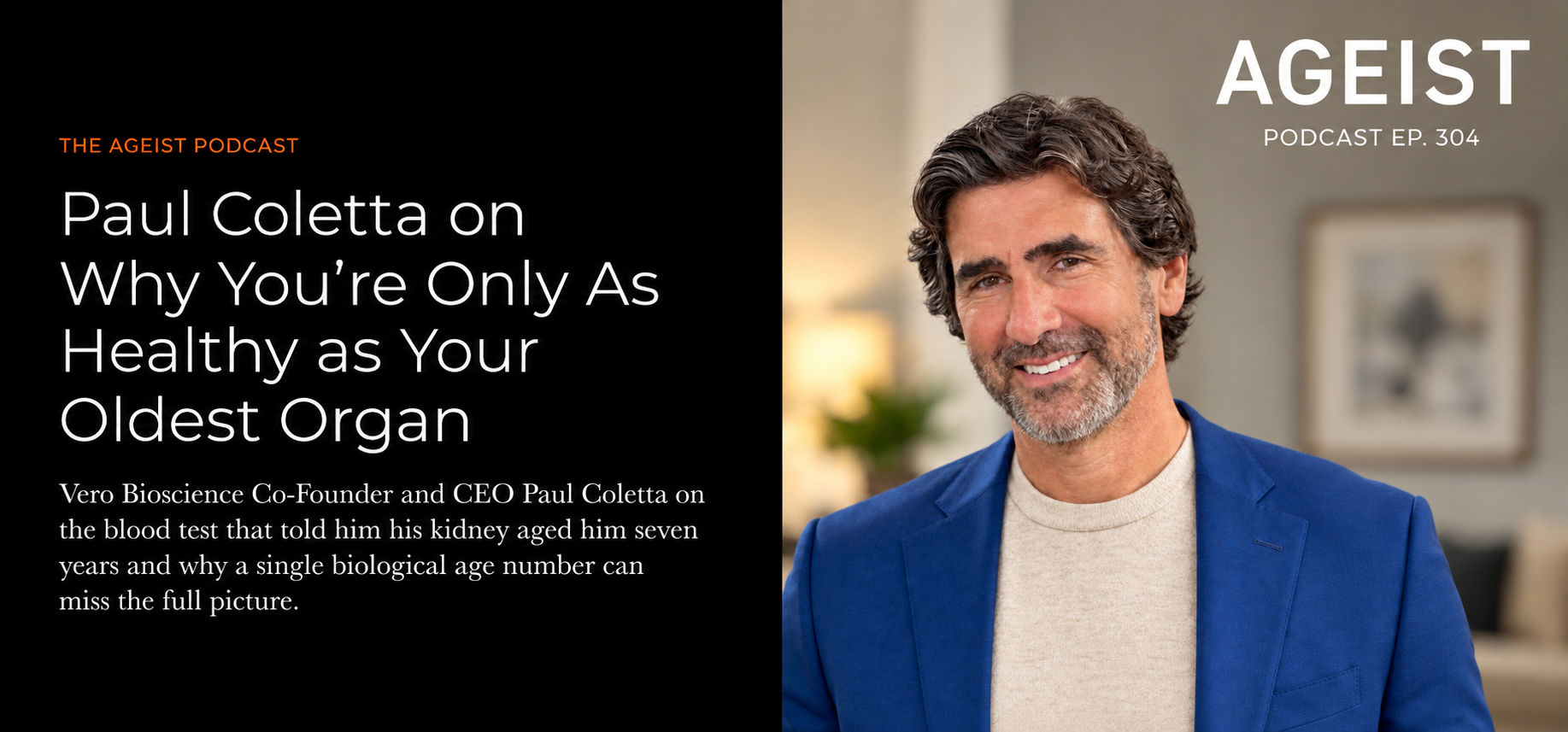
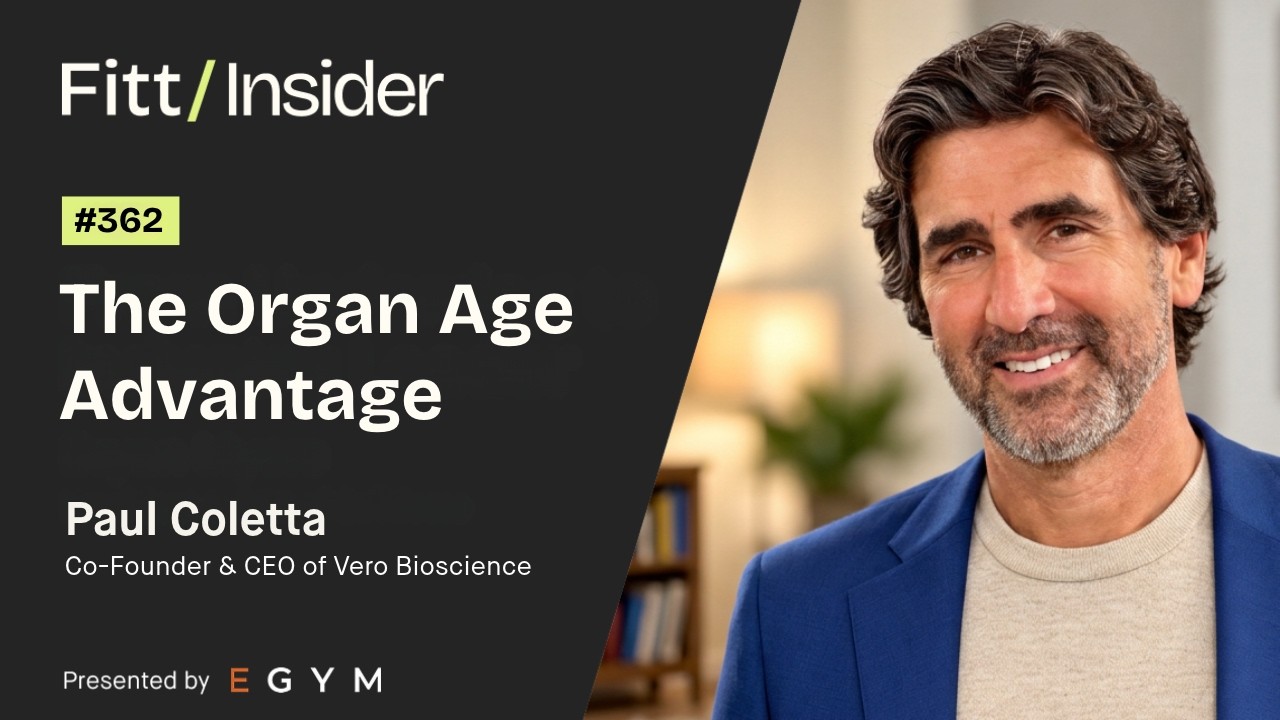
Vero co-founder and CEO Paul Coletta joined host Joe Vennare on the Fitt Insider Podcast to talk about building a closed-loop health system powered by proteomics, and why organ-level data tells you more than a single whole-body score.
Proteins are real-time reporters
Most biological age clocks on the market are DNA methylation clocks. Coletta calls them useful but not especially actionable, because they generally produce a single whole-body score. Vero looks at the proteome instead. DNA is closer to a blueprint, he explains, while proteins are the building blocks of cells and organs, and they change in real time. From a simple blood test, Vero measures about 11,000 proteins and runs them through a machine learning system built on the Stanford research of co-founder Tony Wyss-Coray, PhD, to estimate an age gap for each of 11 organs.
Find the weak link
Coletta returns to his car analogy: the model year is your chronological age, and the odometer is a single biological age. Neither tells you the condition of the engine, the transmission or the brakes, which is where the actionable information lives. You might have a young, resilient heart and an accelerated immune system. Finding your most accelerated organ points to the weak link, because you're only as healthy as your oldest organ.
Reproducibility and clinical validation
Coletta names the two biggest criticisms of biological age clocks: “what do I do with this?” and reproducibility. On the second, Vero is finalizing a year-long study at Stanford that tracks a cohort to separate signal from noise, covering both biological reproducibility and technical reproducibility (the same sample should give the same result every time it's run).
The underlying science has been published in Nature, including a follow-up study of 45,000 people. Vero is now working toward clinical validation with partners, starting with Biograph, where the focus is the heart: comparing Vero results before and after an intervention with clinically accepted measures like VO2 max. Coletta says a second partner, focused on the brain, is coming soon.
“We're actually calling it a compass and not a clock.” — Paul Coletta
A compass, not a clock
Vero Compass™, currently under development, is designed as a closed loop: measure, intervene, remeasure and learn. Coletta describes evidence-informed interventions in three buckets (lifestyle, supplementation, and on- or off-label therapeutics) with a clinician in the loop. He's clear that Vero isn't a diagnostic or a therapeutic. It's predictive, and the goal is organ health, not just an organ age.
Healthspan, not immortality
Coletta says he has no desire to live forever. What interests him is vitality: building resilience and capacity so people stay healthy for longer, and helping them stay out of what he calls the “sick care” system altogether, at a price point everyone can afford.
The road to launch
For now, Vero is working with clinical partners that run IRB studies, and Coletta expects direct-to-consumer access to be at least a year away. The long-term plan is an at-home experience: collect a blood sample at home, receive organ-level results and recommendations, and meet with a clinician by telemedicine. In the meantime, the team is focused on regulatory work, raising capital and bringing the cost of the assay down to a scalable price point.
Watch the full conversation above, including why Coletta believes the future of health is patient-led, and how Vero balances clinical rigor with marketing in a crowded longevity market.
Early access
Discover your OrganAge™
Join our early access list for updates on OrganAge™ and Vero Compass™ as they become more widely available.
Get early accessEarly access
Discover your OrganAge™
Join our early access list for updates on OrganAge™ and Vero Compass™ as they become more widely available.
Get early access