
Podcasts
Key takeaways
- Coletta's central metaphor: a single biological age number is like a car's odometer — informative, but it doesn't tell you the condition of the individual components, which is where actionable risk actually lives.
- His own test flagged his kidney as seven years older than his chronological age, despite normal traditional bloodwork; a follow-up ultrasound found a renal cyst.
- Vero's intervention model spans three buckets: lifestyle fundamentals, supplementation, and FDA-regulated therapeutics.
- Vero is preparing to publish what Coletta describes as the field's first reproducibility study, aiming to show its signal is as stable as an established biomarker like LDL cholesterol.
- Vero plans to stay B2B-to-consumer through clinical partners like Biograph in the near term, with direct-to-consumer access realistically landing around 2028.
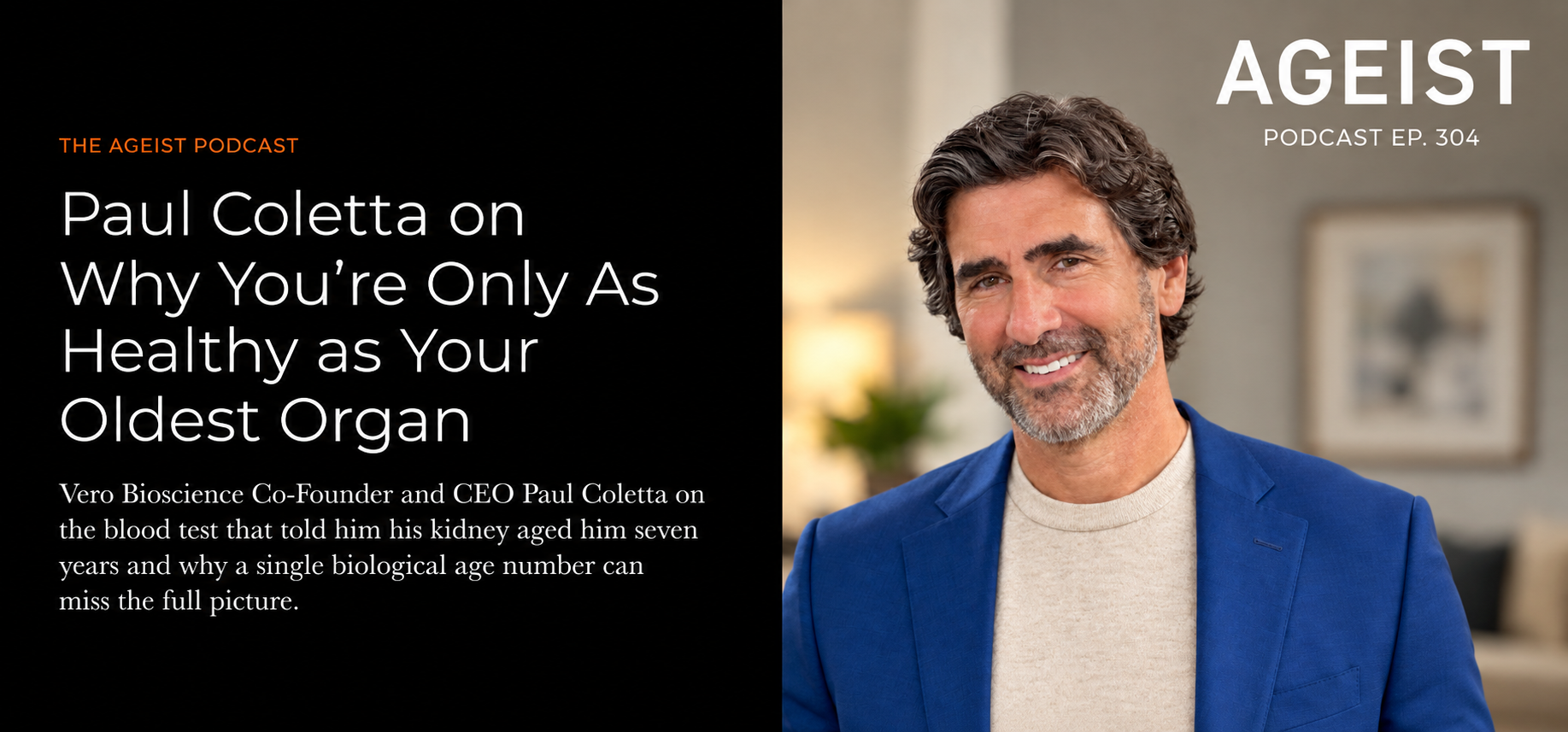
Vero founder and CEO Paul Coletta joined The AGEIST Podcast for a conversation host David Stewart called the first time proteomics actually made sense to him — after struggling to grasp it from a full book chapter on the subject.
Cars don't fail at the odometer. Neither do we.
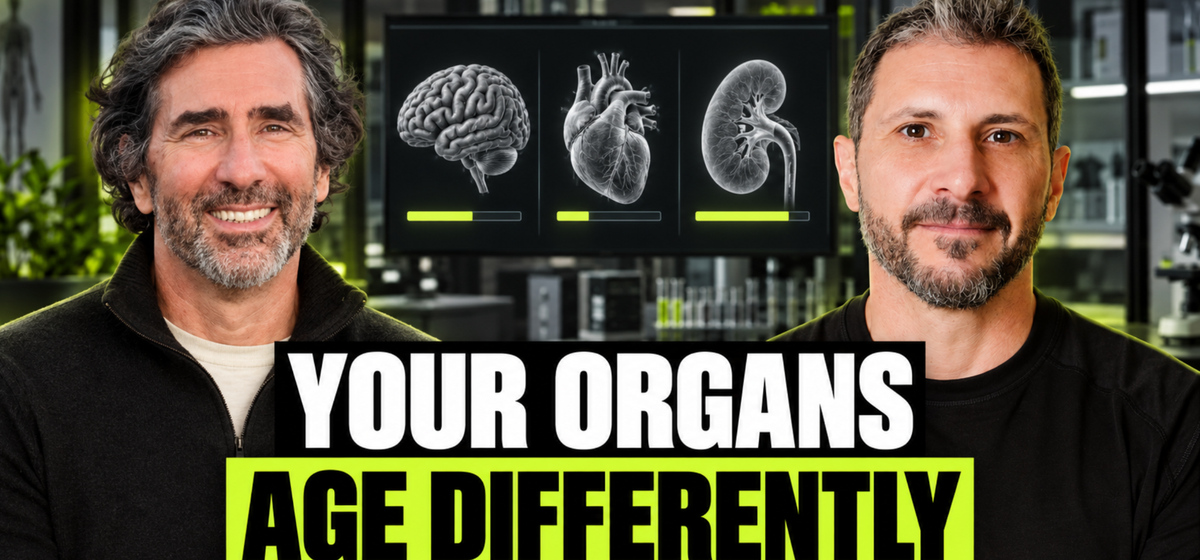
Coletta's explanation centers on a simple metaphor: a car's model year is like chronological age, and its odometer reading is like a single biological age score — both tell you something, but neither tells you the condition of the engine, transmission, or brakes. "That's where the actionable information lives," he says: the health of the individual components. The human body works the same way. A single biological age number hides exactly the risk you'd want to catch early, because it averages away the difference between, say, a young heart and an accelerated immune system.
"The single biological age was the right place to start, but the wrong place to stop." — Paul Coletta
A kidney seven years older, found by accident
Coletta traces Vero back to a friend's introduction to Stanford neuroscientist Tony Wyss-Coray's research two years ago. His own test flagged his kidney as seven years older than the rest of him — a finding his traditional blood labs (creatinine, GFR) showed nothing for. A follow-up ultrasound found a large renal cyst: a sign of aging, not disease, but exactly the kind of signal standard labs had missed.
Three buckets, and a closed loop
Coletta describes Vero's intervention model as three buckets: lifestyle fundamentals (movement, sleep, diet, social connection, stress), supplementation, and FDA-regulated therapeutics used on- or off-label. He was candid that this extends to his own routine — he mentioned specific personal experimentation with sleep optimization, morning light exposure, creatine, and one pharmaceutical intervention, all explicitly framed as "non-medical advice, just what happened to work on Paul's biology," not a recommendation for anyone else.
A first-of-its-kind reproducibility study
Perhaps the most significant new detail: Vero is preparing to publish what Coletta calls the field's first reproducibility study — a 12-month effort at Stanford aiming to show the proteomic signal is as stable as an already-validated biomarker like LDL cholesterol. He was direct that no competing biological age test has published this kind of data, calling it one of the most important things Vero has done to date.
Where this is headed
Coletta says Vero will stay B2B-to-consumer in the near term, working through clinical partners like Biograph under IRB oversight, with a direct-to-consumer product realistically landing around 2028. The near-term goal for Vero Compass — the full closed-loop product pairing testing with clinician-guided intervention and remeasurement — starts in a higher price range, with the underlying assay cost coming down over time.
Listen to the full conversation above, including Coletta's take on why most biological age clocks are "wellertainment," and how he thinks about honest reproducibility in a crowded market.
Early access
Discover your OrganAge™
Join our waitlist to get priority access to OrganAge™ and Vero Compass™ as they become more widely available.
Get early accessEarly access
Discover your OrganAge™
Join our waitlist to get priority access to OrganAge™ and Vero Compass™ as they become more widely available.
Get early access